
Wedding Dress Fabrics: What to Know Before You Shop
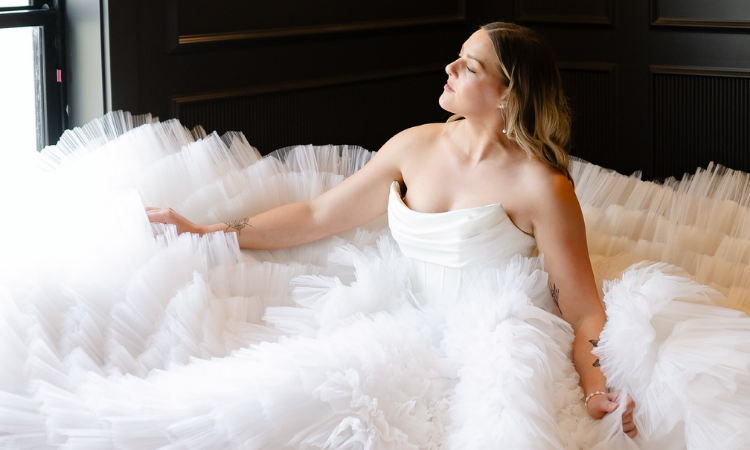
Wedding dress fabrics play a major role in how a gown moves, fits, and photographs. Some fabrics are light and effortless, while others create more structure and drama.
Once you start noticing the differences between fabrics, it becomes easier to narrow down styles that truly match your vision, venue, and comfort level.
Whether you’re drawn to airy fabrics or more structured and polished finishes, this guide will help you choose which materials may feel most like you.
Why Fabric Matters When Choosing a Wedding Dress
Two dresses can have the same silhouette and still look completely different because of the fabric. Some create soft movement and a more romantic feel, while others give the gown a cleaner and more structured finish.
That’s why many brides start focusing on fabric once they begin refining their vision. It helps the gown feel more aligned with your venue, style, and the overall look you want to create.
The Most Popular Wedding Dress Fabrics
Satin
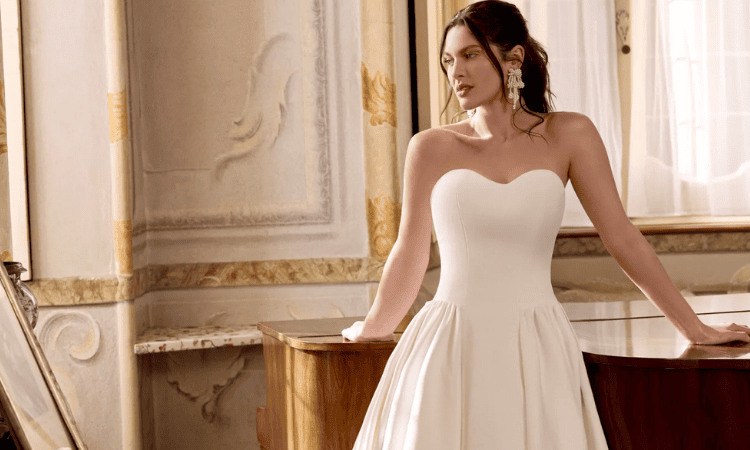
Satin has a smooth finish with a soft sheen that photographs beautifully in both natural light and indoor settings.
It often feels timeless and refined without looking overly traditional. Depending on the weight, satin can create either fluid movement or dramatic structure.
Brides who love classic bridal styling often gravitate toward satin because it feels elevated without needing excessive embellishment.
It also works beautifully for:
- Formal venues
- Black-tie weddings
- Structured silhouettes
- Minimalist bridal looks
If you love clean lines and elegant simplicity, satin may feel like the right balance of luxury and softness.
Lace
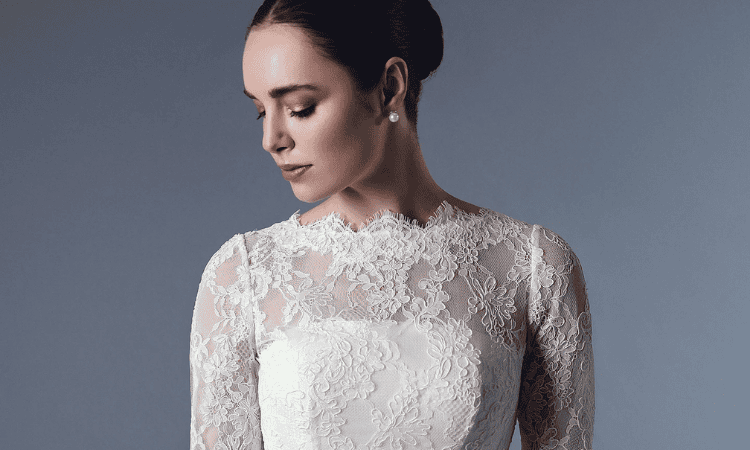
Lace adds texture, detail, and romance that instantly changes the overall feel of a gown.
Some lace designs feel delicate and vintage-inspired, while others feel modern and fashion-forward depending on the pattern and placement.
You’ll often see lace layered over softer fabrics like tulle or chiffon to create dimension and movement. It brings softness to fitted gowns and detail to simpler silhouettes.
Tulle
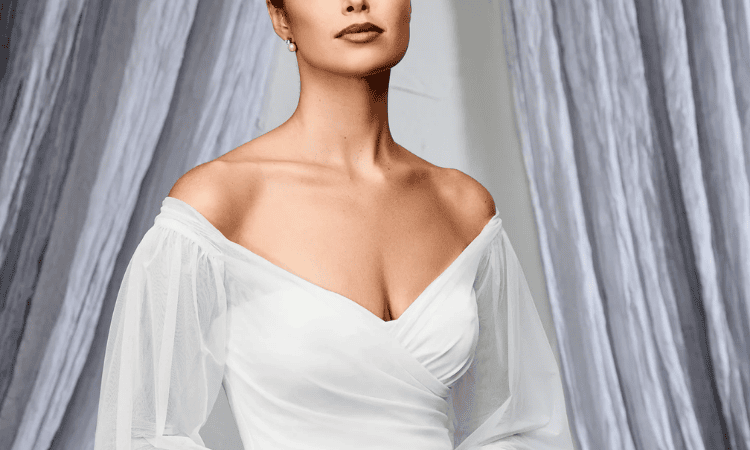
Tulle creates that soft, airy movement many brides picture when imagining a romantic wedding dress.
It’s lightweight, sheer, and often layered to create volume without making the gown feel heavy.
Tulle works especially well for:
- A-line gowns
- Ball gowns
- Soft romantic styles
- Garden or outdoor weddings
Not all tulle feels the same though. Some versions feel soft and flowy, while others create more volume and structure.
If you want movement without excessive weight, tulle often gives that balance.
Crepe
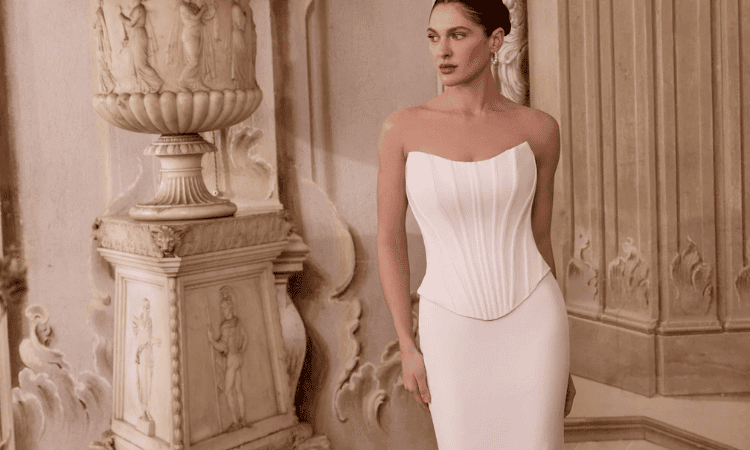
Crepe has become incredibly popular for brides who want a clean and modern bridal look.
It has a matte finish and hugs the body in a softer, more fluid way than satin. Many brides love crepe because it feels effortlessly elegant instead of overly formal.
This fabric works especially well for:
- Minimalist gowns
- Contemporary bridal styles
- Destination weddings
- Sleek fitted silhouettes
Crepe also photographs beautifully because it creates clean lines without excessive shine.
If you’ve been saving simple gowns or modern silhouettes, you’ve probably noticed crepe in many of them.
Mikado
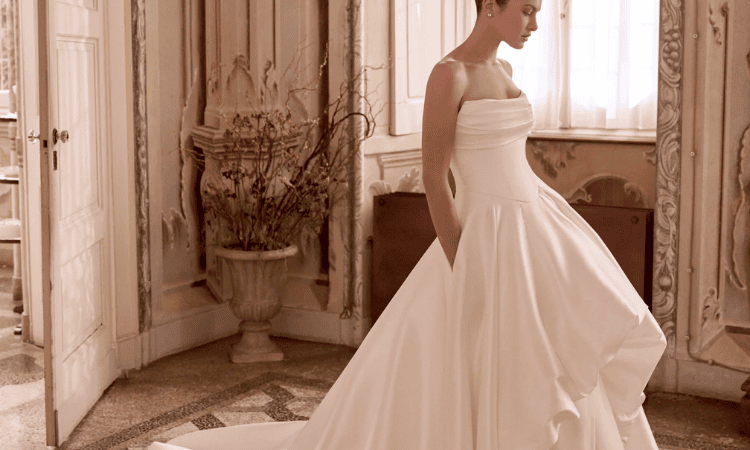
Mikado combines the smooth elegance of satin with more structure and weight.
It holds shape beautifully, which makes it ideal for gowns with architectural details, fuller skirts, or dramatic silhouettes.
Many brides love mikado because it feels luxurious and looks modern and clean.
This fabric works especially well if you want:
- A structured ball gown
- Sharp pleats or folds
- A more sculpted silhouette
- A polished bridal look
It’s especially stunning during fall and winter weddings because of its richer feel.
How to Choose the Right Wedding Dress Fabrics for Your Venue
Some fabrics feel more suited to certain venues, depending on the atmosphere and overall style of the celebration.
Here are a few fabric styles that often work well for different settings:
- Beach or destination weddings: Lighter fabrics like chiffon, soft tulle, and lighter crepe styles tend to feel more breathable and effortless.
- Formal indoor venues: Structured fabrics like satin or mikado often complement the setting beautifully.
- Garden weddings: Softer textures like lace and layered tulle create a romantic and airy feel.
- Church or cathedral weddings: Structured fabrics with longer trains often complement the more traditional setting.
The right fabric helps the gown feel more connected to your setting.
What Wedding Dress Fabrics Feel Like on the Body
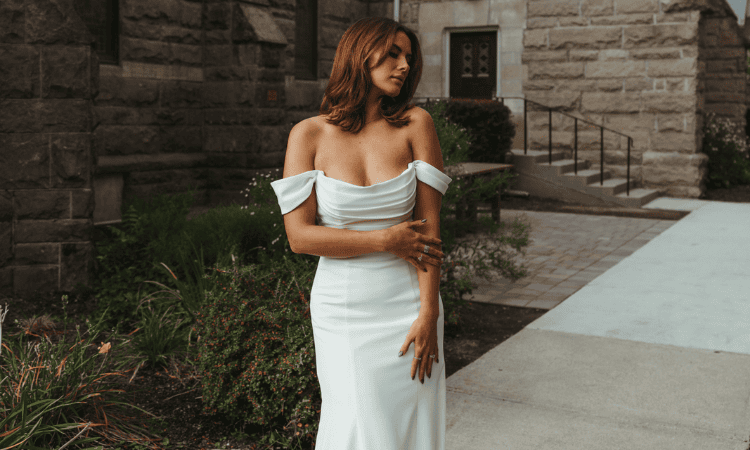
This is something many brides don’t think about until they start trying dresses on.
Some fabrics feel lightweight and barely there, while others feel more secure and sculpted.
If comfort is important to you, pay attention to:
- Weight
- Stretch
- Breathability
- Movement
- Structure
A heavily structured gown can feel supportive and elegant. A softer fabric may feel more relaxed and effortless.
This is also why many brides end up loving dresses they never expected. The fabric can completely change the overall impression of a gown once you try it on.
Wedding Dress Fabrics and Seasonal Weddings
The time of year can help guide which fabrics feel best for your wedding.
Heavier fabrics often feel more comfortable during cooler months because they provide more structure and warmth.
For spring and summer weddings, lighter materials usually feel easier to wear for long hours.
Popular warm-weather fabrics include:
- Chiffon
- Tulle
- Lightweight lace
- Softer crepe
Winter weddings often pair beautifully with:
- Mikado
- Satin
- Heavier lace
- Structured fabrics with lining
Your comfort matters just as much as the aesthetic. Feeling physically comfortable helps you feel more relaxed and confident throughout the day.
How Bridal Stylists Help You Find the Right Fabric
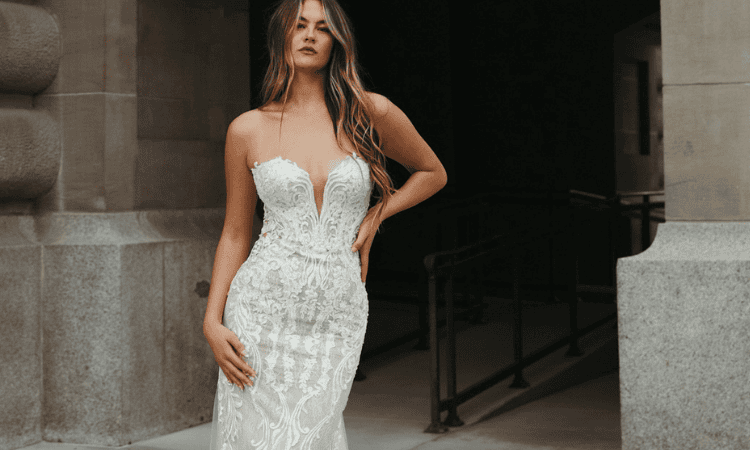
Fabric is not always the first thing brides think about when they start shopping.
A bridal stylist helps you notice the details you may not immediately think about, like how a fabric moves when you walk or whether it complements your venue and overall vision.
Sometimes the right fabric completely changes how confident and comfortable you feel in a gown.
Start Your Wedding Dress Journey at Ivoire Bridal Atelier
At Ivoire Bridal Atelier, we design every appointment to feel personal, relaxed, and tailored to your bridal vision. You’ll have the chance to explore gowns in a range of styles, silhouettes, and fabrics with one-on-one guidance tailored to your venue, aesthetic, and overall look.
Book your bridal appointment today and experience different wedding dress fabrics in person.

